Museums · Cambridge, MA
The Glamour of the Harvard Art Museums
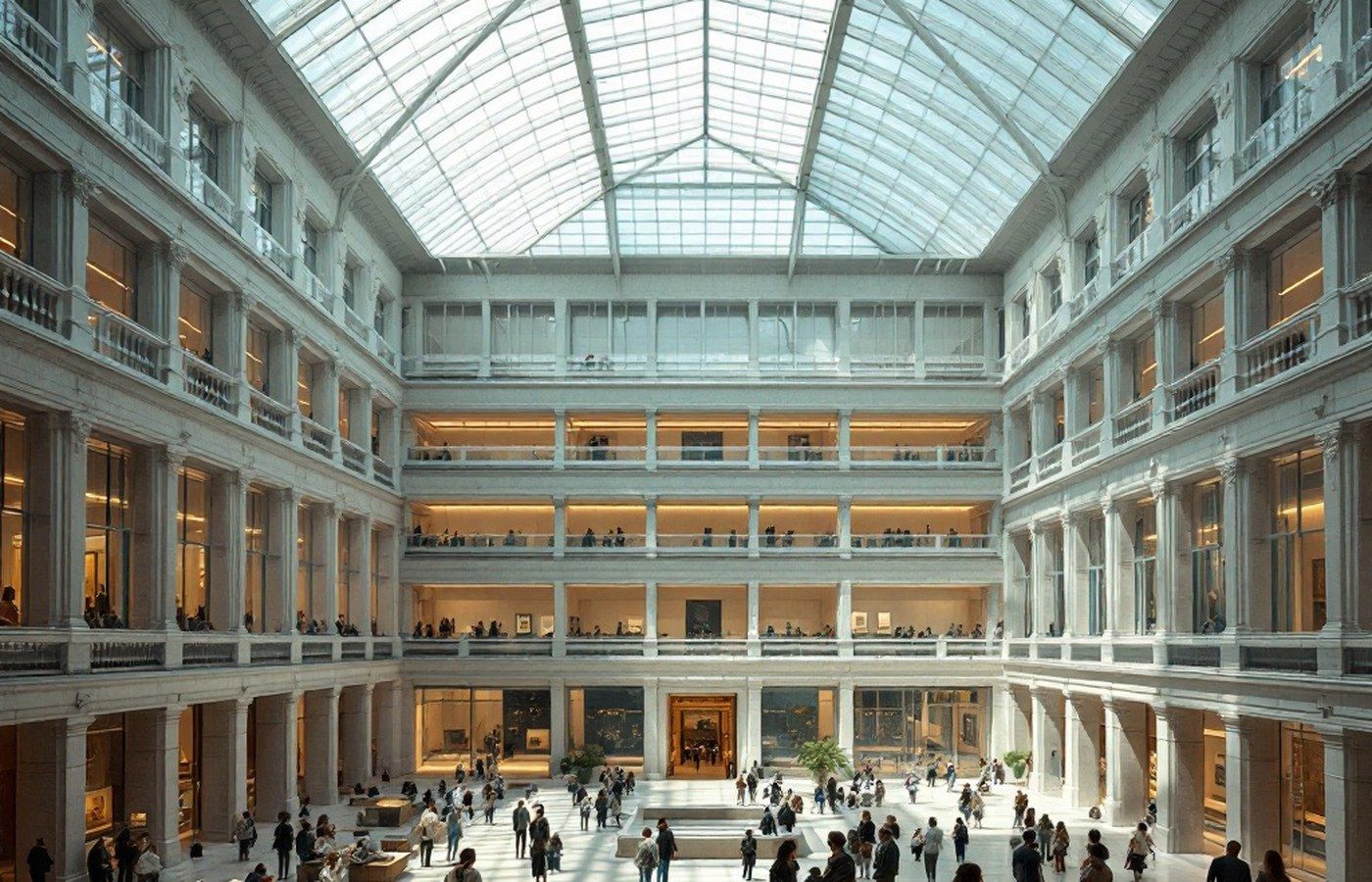
The history of the Harvard Art Museums, and the guiding principle behind them, has made this a great institution — one that leads, and takes innovative steps, in preserving, studying and discovering both old and new forms of art. It is amazing to consider how humans, and artists in particular, have carved out our imagination across the generations. The beauty, so often, lies in simplicity — and yet there is nothing simple about the care it takes to keep these works alive.
Plan your visit
What most visitors do not realise is that the Harvard Art Museums are not one museum but three, gathered together. The Fogg Museum, the oldest, opened in 1895 and is devoted chiefly to Western art from the Middle Ages to the present. The Busch-Reisinger Museum is the only museum in North America dedicated to the art of the German-speaking countries of Central and Northern Europe. And the Arthur M. Sackler Museum holds the collections of Asian, ancient Mediterranean, Byzantine and Islamic art.
In 2014, the three were reunited under a single luminous glass roof in a celebrated renovation by the Italian architect Renzo Piano, whose design floods the central courtyard with daylight and stacks the galleries around it like tiers of a theatre. Within the same walls sits the Straus Center for Conservation and Technical Studies, a pioneer in the science of preserving and analysing works of art — which is exactly why the museum is as much a laboratory as a gallery.
To walk through it is to move from a medieval altarpiece to a Bauhaus experiment to a Chinese bronze in the space of a few minutes — and to sense, everywhere, the quiet, painstaking work of keeping such things safe for the next generation. That, more than any single masterpiece, is the glamour of the Harvard Art Museums.

Full-time blogger and guidance counsellor. I write Art Inconnu to bring overlooked artists and their work back into the light.